Emotional Speech Synthesis Database
About this dataset
1. Product Overview
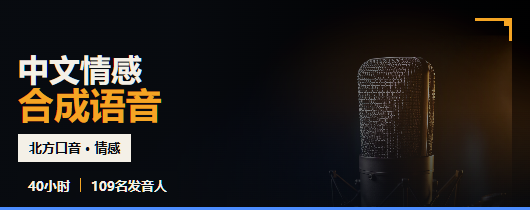
The Chinese emotional speech synthesis database comprises a total of 40 hours of recordings. The recording language is Chinese, and the recordings were made in China. Primarily featuring Northern Chinese accents, the database was created with the participation of 109 speakers. Among them, 100 speakers recorded five emotions—sadness, anger, fear, happiness, and neutrality—while the remaining nine recorded four emotions: sadness, anger, happiness, surprise, and neutrality. All recordings were conducted in a quiet studio using high-fidelity equipment, with audio sampling rates of 48 kHz, 44.1 kHz, and 16 kHz, and a bit depth of 16 bits. This database has been professionally transcribed and annotated by skilled linguists, including character-level transcription, pinyin transcription, and prosodic annotation. Rigorous quality assurance ensures a text accuracy rate of 99%.
2. Recording Corpus
Corpus Pool Construction
Design of Recording Texts
For the first 100 speakers, each was assigned 300 sentences, with 60 sentences per emotion, drawn from the corpus pool. The remaining nine speakers contributed 260 sentences per emotion, structured as follows:
Serial Number · Emotion · Notes (001–100)
1 · Sadness · 0001–0060
2 · Anger · 0061–0120
3 · Fear · 0121–0180
4 · Happiness · 0181–0240
5 · Neutrality · 0241–0300
Serial Number · Emotion · Notes (101–109)
1 · Sadness · 0001–0260
2 · Anger · 0261–0520
3 · Surprise · 0521–0780
4 · Happiness · 0781–1040
5 · Neutrality · 1041–1300
Corpus Pool Processing
- De-identification: Removal of politically sensitive, personally private, or sexually explicit/violent content.
- Comprehensive phoneme coverage.
- Removal of symbols such as <, >, [, ], ~, /, \, =.
- Exclusion of content containing languages other than Chinese and English.
- Elimination of single sentences exceeding 25 characters.
- Standardization of formatting.
3. Speaker Information
Basic Information Records
Speaker information includes task number, gender, accent region, and age range.
Task Number · Gender · Accent Region · Age Range
W0001 · Male · Northern · A
Each speaker receives one task number, corresponding to a specific set of recording texts. Each speaker may participate in only one recording session. Accent regions are categorized based on the speaker’s native linguistic area. Age ranges are defined as follows: A (18–25 years), B (26–40 years), C (41+ years).
Speaker Demographic Characteristics
Gender Ratio
The database contains a total of 109 speakers, comprising 55 males and 54 females.
Gender · Male · Female · Total
Ratio · 50.5% · 49.5% · 100%
· Age Group · Number of Speakers · Ratio
A · 18–25 years · 85 · 78.1%
B · 26–40 years · 16 · 14.7%
C · 41+ years · 8 · 7.2%
Total · 109 · 100% ·
Age Distribution
Age groups include: A (18–25 years), B (26–40 years), and C (41+ years).
4. Data Recording Environment
Recording Environment
The recording environment is a quiet indoor space, free from obvious external voices or other noise, with no echoes and a signal-to-noise ratio exceeding 30 dB. Speakers read the recording texts at their normal speaking pace. Speakers numbered 101–109 recorded in a professional recording studio.
Recording Equipment
The recording equipment is high-fidelity.
Recording Method
Speakers maintain a distance of 20–30 cm from the recording device, reading the texts at normal volume and speed.
5. Speech Data Transcription
Transcribers convert audio into written text, striving for complete consistency between the written content and the spoken audio. General guidelines include: 1) The transcription must exactly match the spoken audio, without extra words, missing words, or errors. 2) Numbers should be transcribed in Chinese characters—for example, “one two three” rather than “123.” Distinguish carefully between “one” and “yao,” and between “two” and “liang.” 3) Any English pronunciation in the audio should be rendered in appropriate Chinese characters or left as English. Specific cases include: all letters or words in URLs should be capitalized—for example, “www.abc.com” becomes “three W dot A B C dot com.” English words within the audio should be transcribed entirely in lowercase; English letters should be capitalized. For certain proper nouns or acronyms that are capitalized and spaced—such as CEO, CCTV—follow these rules. 4) Annotation completeness must align with actual pronunciation; no omissions allowed. 5) Pinyin and tone marks should reflect the actual pronunciation, ensuring consistency between pinyin and text, while accounting for tone changes and erhua (rhotic final sound). For example, clarify whether “zhe4” or “zhei4” is pronounced. Upper tones require careful attention: 33-tone changes—understand 23; 333-tone changes—exhibit 223, very brave 323. Multiple upper tones should be divided according to semantic pauses, then adjusted following established rules. “One, not”—when pronounced alone or at sentence endings, tone remains unchanged; before falling tone 4, it shifts to 2, etc. Erhua adds an “r” to the original syllable—for example, “flower-r.” 6) Prosodic annotations cover prosodic words (#1), prosodic phrases (#2), intonational phrases (#3), and intonational group boundaries (#4). In cases where audio and grammar differ, prioritize the actual audio pronunciation; when adjacent levels are difficult to determine, adopt lower-level annotations.
6. Data File Directory
Directory Structure
The data directory tree structure is as follows:
└─DOC (textual documentation)
││├─all_wav_list.txt (audio list)
││├─spkrinfo.xlsx (speaker information)
││├─content.txt (speaker information)
│
└─SPEECHDATA (data folder)
│├─Female (gender information)
│├─M0002 (speaker information)
│├─angry (emotional information)
││ ││ 0002W0061.wav (audio file)
Naming Rules
Directory Naming Rules
<USAGE>/<Gender>/<SpeakerID>/<mood>/<wav_ID>e.g. SPEECHDATA/Feamle/M0002/angrg/0002W0061.wav
Directory · Content · Notes
USAGE · SPEECHDATA · Folder Name
Gender · Female & Male · Gender Information
SpeakerID · M0001 · Speaker ID
mood · angry · Emotional Category
wav_ID · 0002W0061.wav · Audio File
File Naming Rules
<SPEAKER_ID><WAV_NUM>e.g. 0002W0061.wav
File · Content · Notes
SPEAKER_ID · 0002 · Speaker ID
WAV_NUM · W0061 · WAV Number
Data Sample Download
Samples
- Audio sample 1
- Audio sample 2
- Audio sample 3
- Audio sample 4
- Audio sample 5