Far-field voice assistant speech database
About this dataset
1. Product Overview
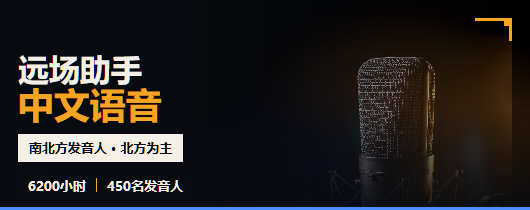
The far-field voice assistant speech database comprises 6,200 hours of audio, recorded with the participation of 450 speakers from both northern and southern China, predominantly from the north. The recording language is Chinese, and the recordings were made across China. The transcribed content consists of interactions with the voice assistant. Recording took place in real home environments, with five recording positions in the living room, four in the bedroom, and three in the kitchen. A circular 16-channel PDM microphone array recording board (16 kHz, 16-bit; model 6083H) was used for far-field pickup, while high-fidelity microphones were employed for near-field pickup (44.1 kHz, 16-bit; model 117H). This database has been professionally transcribed and annotated by skilled linguists and underwent rigorous quality assurance, achieving a text accuracy rate exceeding 98%. It can be utilized for research in speaker recognition, speech recognition, and related fields.
2. Product Catalog Structure
Catalog Structure
Data catalog structure
└─SPEECHDATA (Audio folder)
│├─P0001 (Speaker folder)
│ P0001B01 (Recording position file)
│ P0001B01C01 (Recording position signal channel file)
│ P0001B01C01W0001.wav (Audio file)
└─DOC (Text folder)
│ spk_info.xlsx (Speaker information)
│ content.txt (Annotated content)
│ wav_list.txt (Audio list)
│ ASR0070_Noise_info.xlsx (Scene noise information list)
Naming Rules
<speakerID>\<deviceID>\<deviceID_channelID>\<wavID>.wav. For example: P0001/P0001B01/P0001B01C01/ P0001B01C01W0001.wav
Name · Content · Notes
P0001 · 0001–0500 · Speaker ID
P0001B01 · <meetingID>_B01 & 02 & 03 & 04 & 05 · Device ID
P0001B01C01 · <meetingID>_<deviceID>_C01~16 · Channel ID
P0001B01C01W0001.wav · <meetingID>_<deviceID>_<deviceID_channelID>_W0001~ · Audio ID
3. Text Design
The texts in this database are defined as interactions with the voice assistant. They were generated from a vast collection of real-world voice assistant transcripts, covering 38 domains including daily life, entertainment, and work, and have undergone manual screening and proofreading. Each speaker was assigned 240 sentences—80 randomly selected per scenario. For example, speaker P0001: (refer to the scene noise information table)
No. · Scene Type · Noise Type
0001–0080 · Living Room · Quiet
0081–0160 · Kitchen · Quiet
0161–0240 · Kitchen · Range Hood
4. Recording Environment
Recording Environment
1. The recording scenes were real domestic settings, encompassing the living room, bedroom, and kitchen. 2. Speakers stood at designated positions.
Recording Equipment
A 16-channel circular PDM microphone recording development board was used.
Recording Method
In fixed living room, bedroom, and kitchen settings, recording devices were placed at two, three, or four distinct locations relative to the speaker. Details of recording positions are provided in the following table:
No. · Distance (m) · Height (m)
B01 · 1 · 1
B02 · 3 · 1
B03 · 5 · 1
B04 · -1.5 · 1
B04 · 0.25 · ~
5. Annotation and Transcription Guidelines
Transcribers render the spoken content based on what they hear, striving to ensure that the written text accurately reflects the original audio. Key principles include: 1) Transcriptions must precisely match the spoken words, avoiding extra or missing words or errors. 2) Numbers should be written in Chinese characters, such as “一二三,” rather than “123.” Pay attention to distinguishing between “一” and “幺,” and “二” and “两.” 3) English words appearing in sentences should be transcribed phonetically, e.g., “thank you.” Letters pronounced individually should be rendered in uppercase followed by spaces, such as “N B A” or “U F O.” 4) Symbols within sentences should be transcribed according to the speaker’s pronunciation, e.g., “三W点百度点com.” Unpronounced symbols should be omitted. Brand names and proper nouns should follow their customary forms, such as “QQ空间,” “iPhone,” or “喜马拉雅.” 5) The completeness of annotations must align with the actual pronunciation; no omissions are permitted.
6. Speaker Information
Speaker information includes recording number, gender, age, and region of origin, as shown in the table below:
Recording Number · Gender · Age · Region
P0001 · Female · 19 · Northern Region
Recording numbers: Each speaker receives one unique recording number, corresponding to one transcription. Each speaker may participate in only one recording session. Gender distribution: 237 males and 213 females. Age range: Speakers aged 13–65. Regional distribution: Northern origins account for 96% of all speakers.
Sample Data Download
Samples
- Audio sample 1
- Audio sample 2
- Audio sample 3
- Audio sample 4
- Audio sample 5